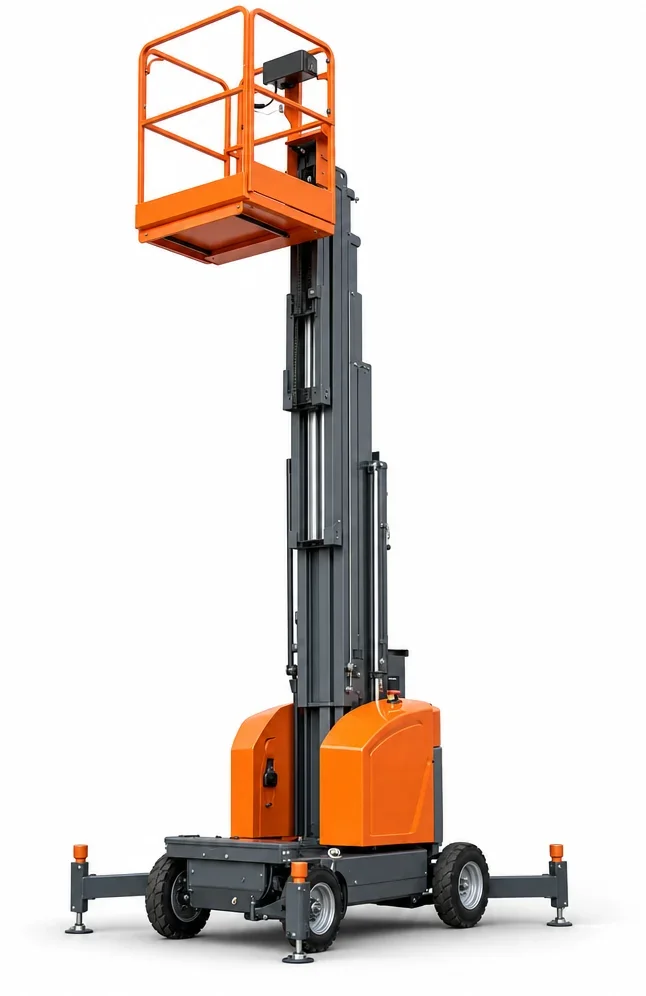
When a mast lift fits the job
- The machine can sit directly below the work with little to no outreach needed.
- One-person access is sufficient for lights, sensors, signs, or light MEP tasks.
- The route includes standard doors, elevators, or tight corners.
If you need more platform space or rough-terrain capability, compare /electric-scissor-lift-rental/ for slab interiors or /rough-terrain-scissor-lift-rental/ for outdoor ground.
Reading-specific considerations
- Renovated interiors: Older facilities being modernized often limit machine width and floor loading. Mast lifts distribute less weight and fit through restricted access.
- Seasonal planning: During winter, indoor maintenance volume rises. Compact footprints reduce disruption around active aisles and production cells.
- Mixed campuses: Getting from one bay to another may involve thresholds and ramps; confirm slope changes, door hardware clearances, and elevator dimensions.
Measurements to confirm
- Platform height needed and whether a vertical-only approach reaches it.
- Minimum doorway/elevator size on the route and tightest turn radius.
- Floor condition and any restrictions on tire type or point loading.
Typical Reading uses
- Re-lamping, sensor work, and signage in distribution aisles.
- Light maintenance under mezzanine floors in adaptive-reuse buildings.
- Inventory equipment installs where aisle downtime must be brief.
Related options
- Need outreach to clear pipes or parapets? See /articulating-boom-lift-rental/.
- Need longer runs of vertical work with larger platforms? Visit /electric-scissor-lift-rental/.
Planning note
Actual conditions, unit instructions, and site procedures govern interior elevation work. Verify clearances and floor capacity across the entire travel path before bringing a lift inside.