Start with placement and reach
Identify where a generator or light tower can sit without blocking material flow. In Reading’s industrial corridors, night work often happens along loading aprons or in repurposed mill buildings. Measure: - Setback from the task to limit glare into operating lanes - Cable or cord length needed to reach tools or temporary panels - Height and angle needed to light vertical surfaces during façade or high-bay work
If the unit must sit below the task—such as at the base of a retaining slope—plan for beam spread and shadowing from railings or scaffolds.
Surface and access routes
Flat valley floors can be smooth slab; older sites and side streets toward higher ground can be rutted or pitched. That changes which towable or skid-mounted units are practical. Confirm: - Approach width for trailers past parked equipment and containers - Ground firmness after freeze–thaw cycles - Clearance under overhead utilities or low dock canopies
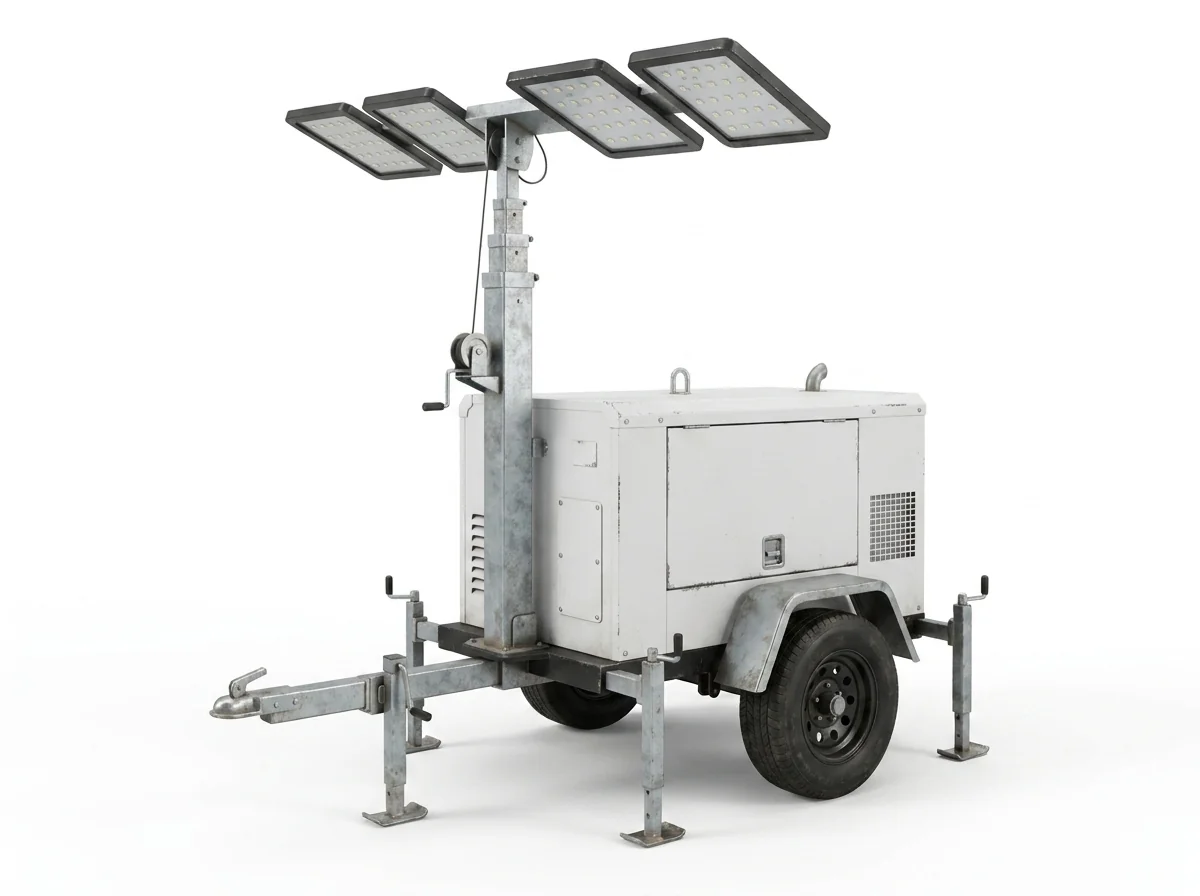
Rougher approaches may favor compact, mast-style light towers that maneuver through tight gates. Smooth, wide yards can accept larger trailers with broader mast arrays.
Power profile and runtime windows
Night pours, extended warehouse maintenance, or overnight changeovers need consistent runtime. Define: - Interruption tolerance for tool circuits versus lighting-only zones - Noise considerations near mixed-use blocks during evening hours - Ventilation if a generator must stage just inside a loading bay during freezing conditions
For all exterior or elevated tasks, actual site conditions, the selected unit’s instructions, and site procedures govern placement and operation.
Coordinating with aerial work
Adaptive-reuse construction in Reading often pairs towers with lifts. Check that mast rotation and light spill do not blind operators on platforms. When the task moves inside during winter, lighting may shift to fixed temporary fixtures while access is handled by indoor lifts such as an electric scissor or vertical mast.
When terrain or height changes
Hilly approaches and uneven gravel lots can slow towing or repositioning. If aerial tasks extend beyond façade lines, lighting aimed from farther back may require taller masts, while high-bay maintenance might need focused beams from below mezzanine edges. For exterior work on sloped ground or job sites with mud and snow, coordinate with rough-terrain scissor lifts or boom lifts to keep work zones separated.