Scissor lifts: indoor vs. exterior
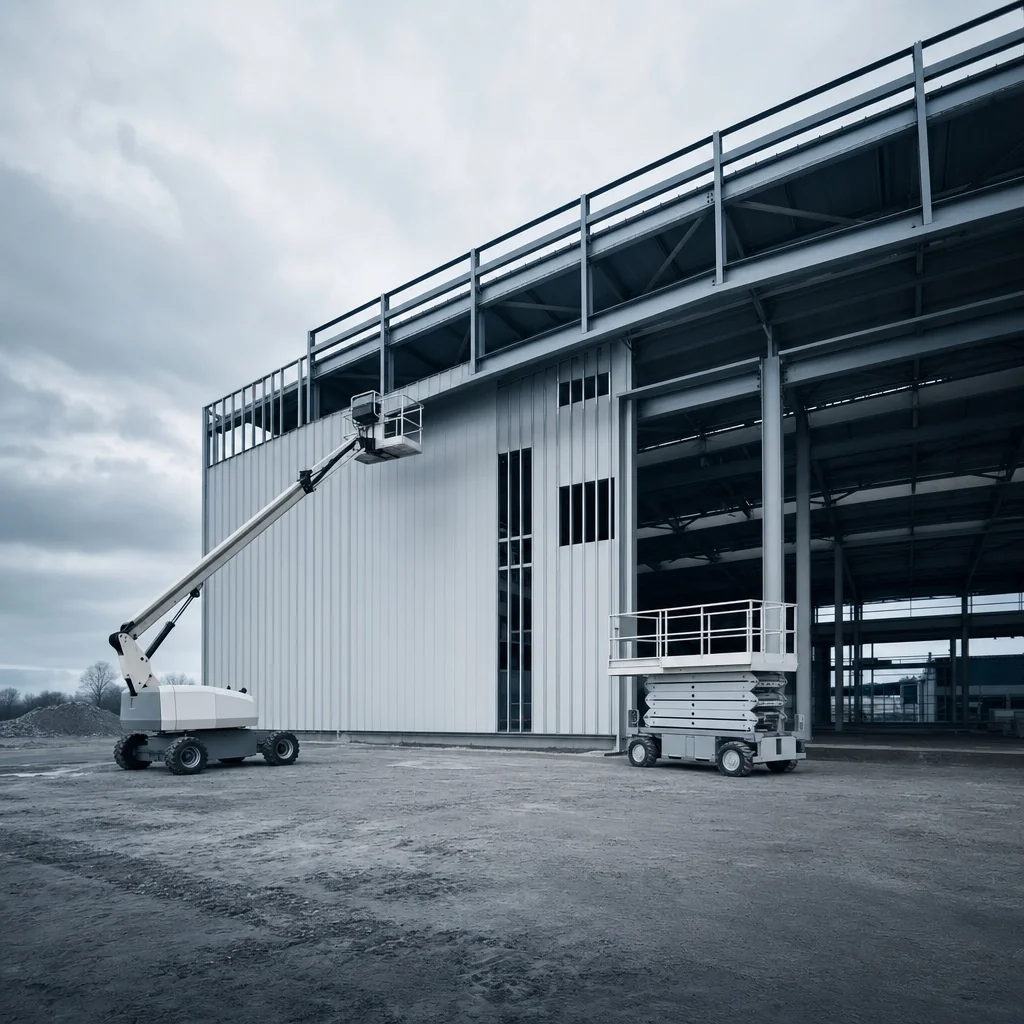
- Electric scissor lifts: Best when floors are smooth, the machine can sit below the task, and ventilation is limited. Common for year-round maintenance inside local distribution buildings. See /electric-scissor-lift-rental/.
- Rough-terrain scissor lifts: Fit exterior slabs, gravel, or graded lots typical of construction phases, especially where winter creates soft patches or snow berms. See /rough-terrain-scissor-lift-rental/.
Boom lifts: reach over or around
When the task can’t be reached from directly below—over setbacks, conveyors, or façade projections—booms add horizontal reach. - Articulating booms: Navigate around ducts, mezzanines, or façade details. See /articulating-boom-lift-rental/. - Telescopic booms: Favor straight, longer outreach on open sites. See /telescopic-boom-lift-rental/. - Category overview: /boom-lift-rental/ and /aerial-lift-rental/.
Vertical mast lifts: compact interior access
Tight aisles in renovated interiors often call for a small footprint and precise positioning below the task. See /vertical-mast-lift-rental/.
Telehandlers and forklifts: material staging
- Telehandlers: Move pallets and materials across uneven lots during exterior phases or when the approach rises toward hillside streets. See /telehandler-rental/.
- Forklifts: Work best on smooth slabs, docks, and organized interior lanes. See /forklift-rental/.
Site products that support lift work
- Generators and light towers: Night shifts and shoulder seasons need power and illumination, especially when façades or yards remain active after daylight. Plan around placement, reach, and winter footing. See /generators-light-towers-rental/.
- Storage containers: Stage tools and finishes near the work while keeping lift aisles and dock lines clear. See /storage-containers-rental/.
- Temporary fencing and barricades: Define work zones around lifts, direct pedestrians, and preserve delivery lanes through constrained sites. See /temporary-fencing-barricades-rental/.
Local conditions that change the choice
- Terrain: Flat valley floors often accept slab machines; routes near higher ground can be steeper or uneven.
- Season: Snow and freezing temperatures from late year into early spring nudge exterior work toward winter-ready planning and shift many tasks indoors.
- Access: Historic structures being converted to modern uses create narrow approaches and overhead pinch points; choose compact platforms or additional outreach when the machine cannot sit directly below the task.
For exterior or elevated work, actual conditions, the selected unit’s instructions, and site procedures govern how equipment is used on site.